




Are you ready to take on a woodworking project but unsure which tool will help you drill perfect holes in your wood? Choosing the right tool can make all the difference between a smooth job and a frustrating experience.
Whether you’re a beginner or looking to upgrade your toolkit, understanding what tool drills holes in wood is essential. You’ll discover the best options, tips to use them effectively, and how to get clean, precise holes every time. Keep reading to unlock the secrets that will make your woodworking easier and more enjoyable.
Types Of Wood Drilling Tools
Drilling holes in wood requires the right tools. Different tools work best for different jobs. Some tools are powered, and some work by hand.
Choosing the right wood drilling tool makes your work easier and faster. Below are common types of wood drilling tools.
Handheld Drills
Handheld drills are popular for wood drilling. They are easy to carry and use anywhere. These drills usually run on batteries or electricity.
They come with different drill bits for various hole sizes. You can adjust the speed and torque for better control.
Drill Presses
Drill presses are large machines for precise drilling. They hold the wood steady while drilling. This helps make straight and exact holes.
These tools are common in workshops. They are great for repetitive drilling tasks. Drill presses often have adjustable speeds and depths.
Brace And Bit
The brace and bit is a manual wood drilling tool. It has a crank handle that you turn by hand. This tool works without electricity or batteries.
It is useful for slow, controlled drilling. It works well in places without power. The bit can be changed for different hole sizes.
Auger Bits
Auger bits are special drill bits for wood. They have a screw tip that pulls the bit into the wood. This makes drilling easier and cleaner.
These bits are used with handheld drills or brace and bit tools. They are good for deep, large holes. Auger bits remove wood chips quickly.
- Sharp screw tip for starting holes
- Wide spiral to clear wood chips
- Different sizes for various hole diameters

Credit: www.amazon.ca
Choosing The Right Drill Bit
Drilling holes in wood requires the right drill bit. Different bits work best for different tasks. Choosing the correct bit makes your job easier and cleaner.
Learn about common drill bits for wood and when to use each one. This guide covers twist bits, spade bits, Forstner bits, and hole saws.
Twist Bits
Twist bits are the most common type. They work well for small to medium holes. These bits have spiral grooves that remove wood chips as you drill.
Spade Bits
Spade bits are flat with a sharp point in the center. They drill large holes quickly. Use them for rough work and when hole shape is not critical.
- Great for holes over 1/2 inch in diameter
- Work fast but can leave rough edges
- Best for softwoods and construction lumber
Forstner Bits
Forstner bits drill clean, flat-bottomed holes. They are perfect for precise woodworking. These bits cut smoothly and leave neat edges.
| Feature | Details |
| Hole Type | Flat bottom, smooth sides |
| Size Range | Small to large diameters |
| Best For | Cabinetry, furniture, fine woodworking |
| Speed | Slower than spade bits |
Hole Saws
Hole saws cut large diameter holes. They have a circular blade and a drill bit in the center. Use them for pipes, wiring, or large openings.
- Ideal for holes larger than 1-1/2 inches
- Leaves rough edges that may need sanding
- Works on wood, drywall, and some plastics
Factors Affecting Drilling Performance
Drilling holes in wood requires the right tools and technique. Several factors influence how well a drill works in wood. Understanding these helps you get clean, accurate holes without damaging the material.
This guide explains important factors that affect drilling performance. You will learn about wood type, drill speed, bit sharpness, and drilling angle.
Wood Type And Hardness
Wood varies in hardness and grain structure. Softwoods like pine are easier to drill. Hardwoods like oak need more force and better drill bits. The type of wood changes how fast and clean the hole will be.
| Wood Type | Hardness Level | Drilling Tip |
|---|---|---|
| Pine | Soft | Use standard drill bits at moderate speed |
| Maple | Medium | Use sharp bits and slower speed |
| Oak | Hard | Use high-quality bits and slow speed |
| Walnut | Hard | Apply steady pressure and sharp bits |
Drill Speed And Torque
Drill speed means how fast the bit spins. Torque means the twisting force. Both affect drilling quality. High speed can cause burning. Low torque may stall the drill. Balance speed and torque for best results.
- Use higher speed for softwood
- Use lower speed for hardwood
- Increase torque to push through tough wood
- Keep speed steady to avoid bit damage
Bit Sharpness
A sharp drill bit cuts wood cleanly. Dull bits cause rough holes and can burn the wood. Check bits often and sharpen or replace them as needed. Clean bits remove wood chips better and drill faster.
Drilling Angle
The angle at which you drill affects hole shape. A straight 90-degree angle makes the cleanest hole. Angled drilling can cause the bit to slip or the hole to be uneven. Use guides or clamps to keep the drill steady.
- Hold drill perpendicular to wood surface
- Use a drill guide for precise angles
- Start with a small pilot hole if needed
- Keep steady pressure and avoid twisting
Step-by-step Drilling Techniques
Drilling holes in wood requires care and the right steps. Using a drill tool properly makes the job easier and safer.
Follow these simple steps to drill clean and precise holes every time.
Marking The Drill Spot
Start by marking the exact spot where you want the hole. Use a pencil or a marker for a clear point.
- Use a ruler or measuring tape to find the right position.
- Mark the spot with a sharp pencil tip.
- If needed, use a center punch to make a small dent. This helps guide the drill bit.
Securing The Wood
Hold the wood firmly to prevent it from moving while drilling. This keeps the hole accurate and safe.
- Use clamps to fix the wood to a workbench.
- Place a scrap piece of wood underneath for support.
- Ensure the surface is stable and flat.
Starting The Hole
Begin drilling slowly at the marked spot. Start with a low speed to avoid slipping.
- Hold the drill steady and perpendicular to the wood.
- Apply gentle pressure to let the drill bit bite into the wood.
- Increase speed once the bit is firmly in the wood.
Finishing Clean Holes
Complete the hole carefully to avoid splintering and rough edges.
| Tip | How to Do It |
| Use the right drill bit size | Match the bit to the desired hole diameter |
| Drill halfway through, then flip wood | Finish hole from the other side to reduce splinters |
| Sand edges | Use fine sandpaper to smooth the hole edges |
Common Drilling Mistakes To Avoid
Drilling holes in wood might seem easy, but mistakes can cause problems. Avoiding common errors helps you get clean, precise holes.
Using the right tool is important, but knowing what not to do is just as key. Learn about common drilling mistakes and how to prevent them.
Splintering And Tear-out
Splintering happens when the wood fibers break around the hole. Tear-out is when chunks of wood pull away, ruining the surface.
These issues often occur when the drill bit exits the wood or the wrong bit is used. Using a backing board can reduce tear-out.
- Use sharp drill bits designed for wood
- Place a scrap wood piece under the workpiece
- Drill slowly as the bit comes out
Overheating The Bit
Drill bits can get very hot during use. Overheating dulls the bit and may burn the wood, causing damage.
To avoid this, keep the drill speed moderate. Let the bit cool down if it feels hot. Using sharp bits also helps reduce heat.
- Use moderate drill speed
- Pause if the bit becomes hot
- Sharpen or replace dull bits
Drilling Off-center
Drilling off-center means the hole is not where you want it. This can weaken the wood or cause misaligned parts.
Mark the spot clearly before drilling. Use a center punch or nail to make a small dent. This helps guide the drill bit.
- Mark the drilling spot precisely
- Create a small dent to guide the bit
- Hold the drill steady and straight
Applying Too Much Pressure
Pressing too hard on the drill can cause the bit to bend or break. It also leads to rough holes and damage to the wood.
Let the drill bit do the work. Apply gentle, steady pressure and keep the drill steady for a clean hole.
- Use light, even pressure
- Keep the drill steady and straight
- Let the bit cut without force
Maintaining And Sharpening Drill Bits
Drill bits need care to work well and last long. Proper maintenance keeps them sharp and safe.
Cleaning, storing, and sharpening drill bits help you drill clean holes in wood every time.
Cleaning And Storage
Remove dust and wood chips from drill bits after each use. Use a brush or cloth for cleaning.
Store bits in a dry place to stop rust. Keep them in a case or holder to avoid damage.
- Clean bits with a soft brush
- Wipe with a dry cloth
- Store in a protective case
- Keep bits away from moisture
Identifying Dull Bits
Dull bits make drilling slow and cause rough holes. They may also create extra heat.
Check bits for rounded edges, chips, or discoloration. These signs show the bit needs sharpening.
- Slow drilling speed
- Rough or uneven holes
- Visible edge damage
- Bit feels hot quickly
Sharpening Techniques
Use a bench grinder or sharpening tool to sharpen drill bits. Keep the original angle of the bit.
Work slowly and evenly on both cutting edges. Check the sharpness often to avoid over-sharpening.
- Hold bit steady and aligned
- Grind edges with light pressure
- Sharpen both sides equally
- Cool bit with water if hot
- Test sharpness by drilling a scrap piece
Safety Tips For Wood Drilling
Drilling holes in wood is common in many projects. Using the right tool is important.
Safety is very important when drilling wood. Follow these tips to avoid accidents.
Protective Gear
Always wear protective gear before you start drilling. This helps protect your body from harm.
Wear safety glasses to protect your eyes from wood chips. Use ear protection if the drill is loud.
- Safety glasses or goggles
- Ear plugs or ear muffs
- Dust mask to avoid breathing sawdust
- Work gloves to protect your hands
Proper Workspace Setup
Set up your workspace to be safe and organized. A clean space helps you work better.
Make sure your work surface is stable. Good lighting helps you see clearly. Remove all clutter.
- Use a sturdy workbench or table
- Keep the area free of tools and debris
- Ensure good lighting to see the drill and wood
- Secure the wood piece with clamps to prevent movement
Handling Power Tools Safely
Power drills can be dangerous if not used properly. Always follow safe handling rules.
Check the drill before use. Keep both hands on the tool. Avoid loose clothing that can catch.
- Inspect the drill for damage before use
- Use the correct drill bit for wood
- Hold the drill firmly with both hands
- Keep fingers away from the drill bit
- Do not force the drill; let it work at its own speed
- Unplug the drill when changing bits or not in use
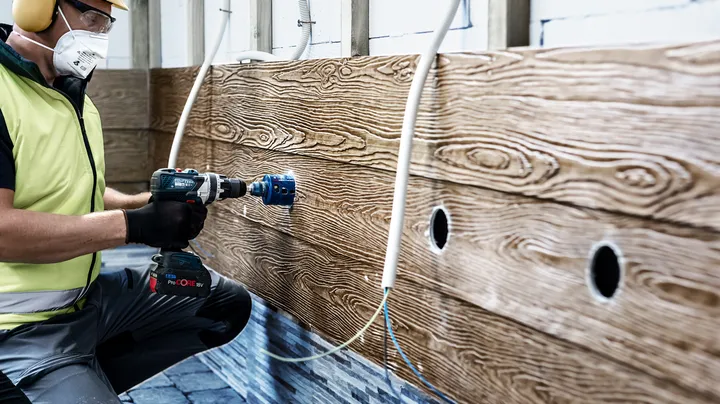
Credit: www.bosch-professional.com

Credit: www.bosch-professional.com
Frequently Asked Questions
What Is The Best Tool For Drilling Wood?
The best tool for drilling holes in wood is a power drill. It provides precision and efficiency. Consider using a drill bit specifically designed for wood to achieve clean and accurate holes. Cordless drills are convenient for mobility, while corded drills offer consistent power.
Can I Use A Regular Drill For Wood?
Yes, a regular drill can be used for wood. Ensure you use appropriate wood drill bits. These bits have a pointed tip and sharp edges for clean cuts. Adjust the drill speed for optimal results. For softer woods, a lower speed setting is usually sufficient.
How Do I Choose The Right Drill Bit?
Select drill bits based on the wood type and hole size needed. For hardwood, use a high-speed steel bit. For softer wood, a brad-point bit is ideal. Ensure the drill bit is sharp and in good condition to avoid splintering.
What Safety Precautions Should I Take?
Always wear safety goggles to protect your eyes from debris. Secure the wood firmly before drilling to prevent movement. Keep hands away from the drill bit. Use a dust mask if working with treated wood to avoid inhaling harmful particles.
Conclusion
A drill is the best tool to make holes in wood. It works fast and makes clean, round holes. Different drill bits help with various hole sizes and shapes. You can use a hand drill or an electric drill, depending on your needs.
Remember to choose the right drill bit for the wood type. Always wear safety gear to protect your eyes and hands. With the right tool and care, drilling wood becomes simple and safe. Try it yourself and see how easy it is!